The Complete Guide to Adult ADHD Evaluation in Tennessee
Suspect ADHD as an adult in Tennessee? Learn how evaluation works, what to expect, and how to find a psychiatric provider — virtual, statewide.

Reviewed by: Richard Yadon, APRN, PMHNP-BC — Board-Certified Psychiatric Mental Health Nurse Practitioner. Tennessee-licensed. Specializing in adult ADHD evaluation, concierge telepsychiatry, and mental performance support for high-functioning adults. MindCare Health, Franklin, Tennessee.
About This Guide
This guide explains the adult ADHD evaluation process for adults in Tennessee. It covers how to recognize adult ADHD patterns, which providers can diagnose it, what a thorough evaluation involves, how virtual telepsychiatry works statewide, and what treatment options are available after diagnosis. Written for adults aged 25–60 who suspect ADHD or are exploring psychiatric care for the first time. Reviewed by Richard Yadon, APRN, PMHNP-BC, board-certified psychiatric mental health nurse practitioner licensed in Tennessee.
You are good at your job. You have a full life. And you have spent years wondering why certain things feel harder for you than they seem to be for everyone else.
Maybe it's the unfinished projects stacking up in your home office. The important email you drafted in your head three times but never sent. The meeting you dominated with ideas, then forgot half the action items. The exhaustion that arrives by mid-afternoon despite a full night of sleep.
You have found workarounds. You work harder. You set reminders for the reminders. But somewhere in the back of your mind, a question has been growing: Could this be ADHD?
That question is worth answering — clearly, professionally, and without judgment. This guide gives you everything you need to understand the adult ADHD evaluation process in Tennessee, from recognizing the patterns to finding the right psychiatrist for adult ADHD who actually fits your life.
1. What Is a Psychiatrist for Adult ADHD — And Do You Need One?
Quick Answer: Do you need a psychiatrist to get an ADHD evaluation?
Not always — but a psychiatric provider is the gold standard for adult ADHD evaluation because they can assess for co-occurring conditions, rule out other diagnoses, and manage medication if needed. For adults with complex presentations, a psychiatric evaluation provides the most thorough and clinically accurate assessment.
The term psychiatrist for adult ADHD gets used loosely online. So let's be specific.
A psychiatrist is a medical doctor (MD) or, in many states including Tennessee, an advanced practice nurse with psychiatric specialty credentials (such as APRN, PMHNP-BC) who is licensed to diagnose psychiatric conditions and prescribe medication. They are trained to distinguish ADHD from conditions that look similar — anxiety, depression, sleep disorders, trauma — and to understand how multiple conditions can exist at the same time.
A psychologist can also evaluate for ADHD using neuropsychological testing. A therapist can provide support but typically cannot diagnose or prescribe. A primary care physician can sometimes diagnose adult ADHD, though their tools for complex assessment may be limited.
Who Provides Adult ADHD Evaluation in Tennessee?
| Provider Type | Can Diagnose? | Can Prescribe? |
|---|---|---|
| Psychiatrist (MD/DO) | Yes | Yes |
| Psych NP (APRN, PMHNP-BC) | Yes | Yes (in Tennessee) |
| Psychologist (PhD/PsyD) | Yes | No |
| Therapist (LCSW, LPC) | No | No |
| Primary Care Physician | Sometimes | Yes |
For adults who suspect ADHD — especially those who are high-functioning and may present differently than classic textbook cases — a psychiatric provider with ADHD experience is the most reliable starting point.
According to the American Psychiatric Association (2022), ADHD is among the most commonly underdiagnosed psychiatric conditions in adults — and it is believed that the majority of adults living with ADHD have never received a formal diagnosis.
MindCare Health specializes in adult ADHD evaluation for adults across Tennessee. The entire process is virtual, private-pay, and designed around the realities of a demanding professional life — not a waiting room system built for someone else's schedule.

2. Adult ADHD in Tennessee: What the Numbers Tell Us
Quick Answer: How common is adult ADHD in Tennessee?
Adult ADHD affects an estimated 4.4% of adults in the United States, which translates to hundreds of thousands of Tennessee adults living with ADHD — many of them undiagnosed. Tennessee has historically had limited access to adult psychiatric care, particularly outside major urban centers, making virtual evaluation a meaningful option for residents across the state.
ADHD is not a childhood condition that resolves at 18. Research has consistently shown that the majority of children diagnosed with ADHD continue to experience symptoms as adults — and that many adults were never diagnosed as children at all.
A landmark study published in The American Journal of Psychiatry (Kessler et al., 2006) found that adult ADHD affects approximately 4.4% of adults in the United States — roughly 11 million people.
In Tennessee, access to adult psychiatric care has long been uneven. Rural areas, long wait times at community mental health centers, and a shortage of psychiatrists who specialize in ADHD assessment have left many adults without clear answers — even those who have suspected ADHD for years.
The Health Resources and Services Administration (HRSA, 2023) designates large portions of rural and suburban Tennessee as Mental Health Professional Shortage Areas, meaning there are not enough providers to serve the existing population. You can verify Tennessee's designated shortage areas using the HRSA HPSA Finder at data.hrsa.gov.
That gap is part of why virtual telepsychiatry has grown significantly in Tennessee. Since the COVID-19 public health emergency expanded telehealth access, adult patients across the state have been able to receive psychiatric evaluation without driving hours to a major city.
Who Gets Missed Most Often?
The research on who goes undiagnosed tells a consistent story. Certain groups are far more likely to reach adulthood without ever receiving an evaluation:
- Women, whose ADHD symptoms often present as anxiety, perfectionism, or emotional sensitivity rather than hyperactivity
- High achievers who compensated for ADHD symptoms through intelligence, effort, and structured environments
- Adults diagnosed with anxiety or depression first, when those conditions may have been downstream of unmanaged ADHD
- Adults from communities with limited access to psychiatric care, including much of rural Tennessee
Research by Young et al. (2020) found that women with ADHD are diagnosed an average of five years later than men, and are significantly more likely to be first diagnosed with anxiety or depression instead.
If you grew up being told you were bright but scattered, or if you have a long history of anxiety that never quite resolved, those patterns may be worth re-examining.
⬦ Ready to get clarity about your ADHD?
MindCare Health offers virtual ADHD evaluations for adults across Tennessee. Private-pay, HSA/FSA eligible, and designed to fit your schedule. Visit mindcarehealth.com to learn more.
3. How Do You Know If You Have Adult ADHD? Recognizing the Patterns
Quick Answer: What does adult ADHD actually look like?
Adult ADHD rarely looks like a hyperactive child bouncing off walls. In adults — especially high-functioning ones — it looks like chronic inconsistency: the ability to perform brilliantly in high-interest situations combined with significant difficulty in routine, low-stimulation tasks. Executive function challenges, emotional dysregulation, and time blindness are common, even when outward performance looks fine.
Here is something worth understanding about adult ADHD: the presentation has almost nothing to do with what you may have seen in a third-grade classroom.
Adult ADHD is not about being unable to focus. It is about having a brain that struggles to regulate attention — which means hyperfocusing intensely for hours on something compelling, while being almost unable to start a task that feels routine or low-stimulation.
The attorney who delivers brilliant arguments in court but loses her keys every single morning. The software engineer who can code for six hours straight on an interesting problem but avoids a ten-minute expense report for weeks. The executive who runs high-stakes meetings effortlessly but cannot get through a stack of routine emails.
That inconsistency — that gap between what you know you are capable of and what you can actually produce on a given day — is one of the most recognizable features of adult ADHD.
Common Adult ADHD Patterns in High-Functioning Adults
| ADHD Pattern | How It Often Looks in Adults |
|---|---|
| Attention dysregulation | Hyperfocus on interesting tasks; difficulty sustaining attention on routine ones |
| Executive function challenges | Trouble initiating tasks, organizing multi-step projects, or following through |
| Time blindness | Consistent underestimation of how long tasks take; arriving late despite good intentions |
| Emotional dysregulation | Frustration or disappointment that feels more intense than the situation warrants |
| Working memory gaps | Forgetting conversations, losing track of where you put things, or missing details |
| Rejection sensitivity | Strong emotional reaction to perceived criticism or failure — even from trusted sources |
| Inconsistent performance | Brilliant one day, unable to function the next — with no obvious external explanation |
Research by Brown (2005) found that adults with ADHD often score in the superior range on IQ tests, while still showing significant impairment in executive function tasks — including planning, organization, and task initiation.
Emotional dysregulation is one of the most impairing — and least recognized — features of adult ADHD. Shaw et al. (2014), writing in The American Journal of Psychiatry, found that emotional dysregulation affects up to 70% of adults with ADHD and contributes significantly to occupational and relationship difficulties, often independently of the attention and hyperactivity symptoms that define formal diagnostic criteria.
ADHD is a brain wiring difference, not a character flaw. It is not laziness. It is not a lack of intelligence. And it is not something that simply gets better with enough effort or the right planner.
But it is worth knowing. Because when you understand how your brain actually processes attention and executive function, you can stop fighting the wrong battle.
When Should You Consider an Evaluation?
These are the patterns worth discussing with a psychiatric provider:
- You have always struggled with starting tasks, despite understanding them well
- You frequently lose track of time, conversations, or important items
- You perform inconsistently — sometimes exceptional, sometimes inexplicably stuck
- You have a long history of anxiety or depression that has never fully resolved
- You were told as a child that you were "bright but not working to your potential"
- You have developed elaborate systems to manage basic responsibilities — and they still break down
- You feel chronically exhausted from the effort of managing what looks easy for others
None of these patterns confirm a diagnosis. That is what a professional evaluation is for. But if several of these descriptions feel familiar, an evaluation can give you answers where you currently have uncertainty.
⬦ These patterns sound familiar?
A professional evaluation can tell you what's actually going on. MindCare Health offers virtual adult ADHD evaluations statewide in Tennessee. Visit mindcarehealth.com.
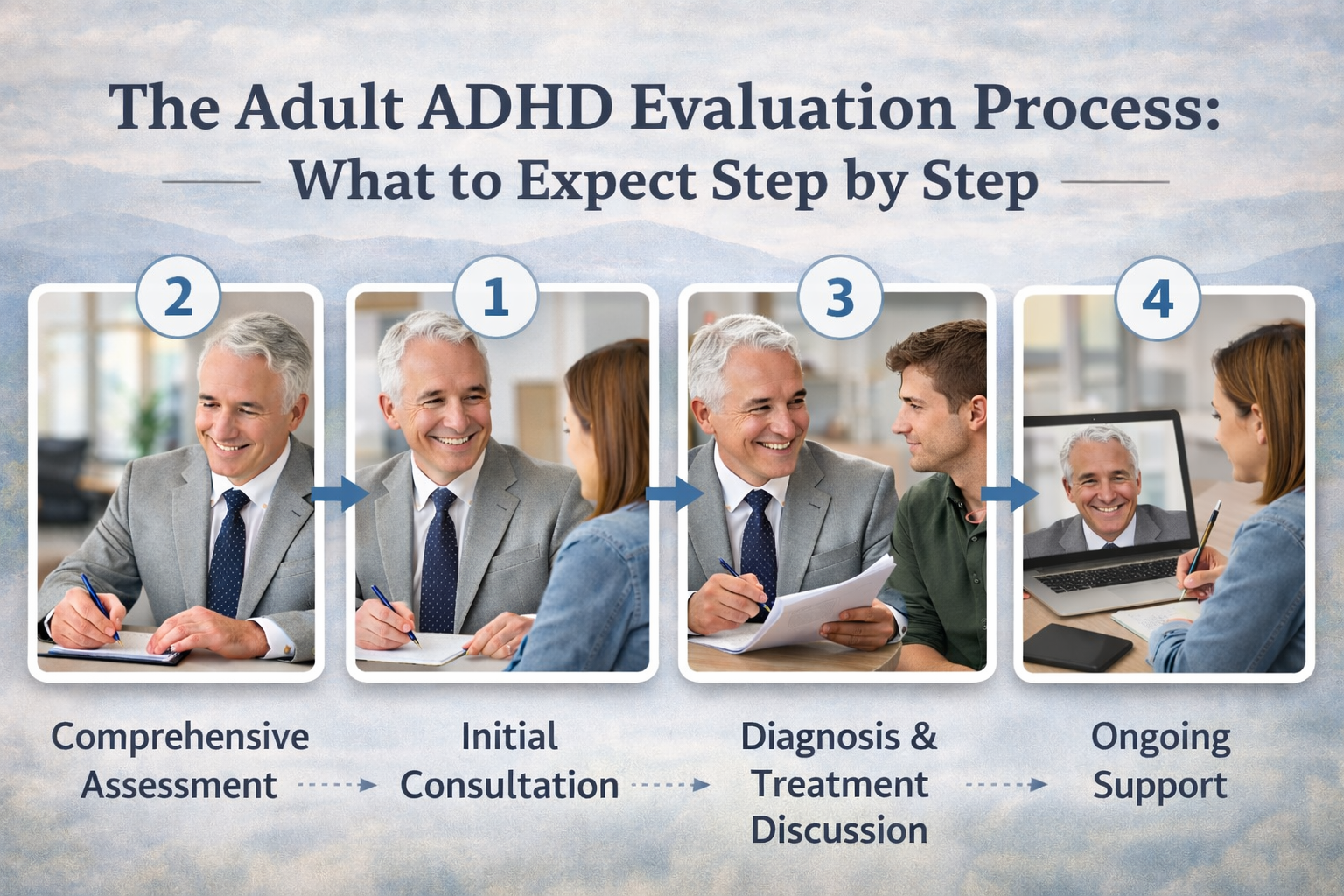
4. The Adult ADHD Evaluation Process: What to Expect Step by Step
Quick Answer: What happens during a professional adult ADHD evaluation?
A thorough adult ADHD evaluation includes structured clinical intake, standardized rating scales, a detailed developmental history, and a clinical interview that examines how symptoms present across multiple life settings — work, relationships, and daily functioning. It typically also screens for co-occurring conditions like anxiety, depression, and sleep disorders that can mimic or overlap with ADHD.
One reason adults put off ADHD evaluation for years is that they do not know what to expect. The process can feel mysterious, expensive, or time-consuming — especially if you have heard stories of full neuropsychological testing batteries that take multiple days.
The reality is that a skilled psychiatric clinician can conduct a thorough adult ADHD evaluation in a focused, efficient format. Here is what the process typically involves.
Step 1: Clinical Intake and Developmental History
Before the evaluation appointment, you will typically complete structured intake questionnaires. These gather information about your current symptoms, developmental history, academic background, and functional challenges across different life settings.
This history matters because ADHD symptoms must have been present since childhood — even if they were not recognized or named at the time. The evaluation looks for early indicators: report cards with "not working to potential" comments, early signs of difficulty with routine tasks, or academic struggles in certain subjects despite general capability.
Step 2: Standardized Rating Scales
The most widely used screening tool is the Adult ADHD Self-Report Scale (ASRS-v1.1), developed in collaboration with the World Health Organization (Kessler et al., 2005). It is a starting point — not a complete picture.
More comprehensive scales, such as the Conners Adult ADHD Rating Scales (CAARS), examine symptom patterns and their impact on daily functioning, including work performance, relationships, and overall quality of life. These tools provide standardized data that the clinician then interprets in context.
Standardized scales are useful. But they do not tell the whole story for high-functioning adults who have compensated effectively for years.
Step 3: Clinical Interview
This is the core of the evaluation. A skilled clinician will explore:
- How attention and focus challenges present in your specific life
- Your emotional regulation patterns and how they affect work and relationships
- Sleep habits, energy patterns, and mood history
- How symptoms have changed across different life stages
- Current coping strategies and their effectiveness
- Family history of ADHD or related conditions
The clinical interview is where your individual story gets heard — not just checked against a list of symptoms.
Step 4: Screening for Co-Occurring Conditions
Adult ADHD rarely exists alone. Anxiety disorders, depression, sleep disorders, and trauma are all highly common in adults with ADHD — and all of them can both mimic and worsen ADHD symptoms.
The National Comorbidity Survey (Kessler et al., 2006) found that approximately 75% of adults with ADHD have at least one co-occurring psychiatric condition — most commonly anxiety disorder (47%) or depressive disorder (19%).
A thorough evaluation does not just look for ADHD. It builds a complete picture of your mental health — because treating ADHD while missing anxiety, or treating depression while missing underlying ADHD, produces limited results.
Step 5: Diagnostic Determination and Written Report
At the end of a thorough evaluation, your provider will give you a clear diagnostic determination. Not "well, you have some ADHD tendencies" — a real answer. You should receive a written report that outlines what was found, the reasoning behind the diagnosis, and practical next steps.
The Diagnostic and Statistical Manual of Mental Disorders, Fifth Edition (DSM-5) requires that ADHD symptoms be present in two or more settings, have persisted for at least six months, and cause meaningful impairment in daily functioning — criteria that a professional evaluation is designed to assess thoroughly.
5. Assessment Tools Used in Adult ADHD Evaluation
Quick Answer: What tools are used to evaluate adult ADHD?
Professional adult ADHD evaluations use a combination of standardized self-report scales, clinician-administered rating scales, structured clinical interviews, and developmental history review. For complex cases, cognitive testing or continuous performance tests may be added. No single tool is diagnostic on its own — a complete evaluation requires clinical judgment applied across multiple data sources.
Assessment tools are instruments. They generate data. They do not make decisions.
Understanding the tools used in adult ADHD evaluation helps you ask better questions — and understand what a thorough assessment actually looks like.
| Assessment Tool | What It Measures | Limitation |
|---|---|---|
| ASRS-v1.1 (WHO) | Screening for ADHD symptom frequency | Designed for general population; may miss high-compensators |
| Conners CAARS | Current symptoms + daily functioning impact | Relies on self-report; benefits from a collateral rater |
| Brown ADD Scales | Executive function across six domains | Less sensitive to hyperactive presentation |
| Continuous Performance Test (CPT) | Sustained attention + impulse control | Context-dependent; hyperfocus can inflate scores |
| TOVA | Objective attention + response time data | Standardized but requires clinical interpretation |
| Clinical Interview | Developmental history + life context | Requires a skilled clinician; more time-intensive |
One particularly revealing tool is the Continuous Performance Test. It measures sustained attention and impulse control over a repetitive, low-stimulation computer task — which is exactly the type of environment where ADHD symptoms surface most clearly.
Research using the Test of Variables of Attention (TOVA), developed by Greenberg and Waldman (1993), demonstrated that adults with ADHD show measurably different response time patterns and consistency compared to neurotypical controls — even when self-report ratings fall within normal ranges.
What makes assessment complex for high-functioning adults is that intelligence and coping strategies can mask symptoms on self-report scales. Someone who has learned to over-prepare, over-schedule, and over-compensate may score lower on symptom frequency measures simply because their compensations are working — at a significant personal cost.
This is why clinical expertise matters as much as the tools themselves.

6. The High-Functioning ADHD Paradox: Why Smart People Get Missed
Quick Answer: Can high-achieving adults really have ADHD?
Yes — and they are frequently missed. High intelligence, structured environments, and effective compensatory strategies can mask ADHD symptoms for decades. Many high-functioning adults with ADHD receive their diagnosis in their 30s, 40s, or 50s after a life transition — a new role, a major project, a life stressor — finally overwhelms the systems they built to manage undiagnosed ADHD.
This is the part of the conversation that surprises people most.
ADHD and high achievement are not mutually exclusive. They coexist constantly. Research by Brown (2005) found that many adults with ADHD scored in the superior range on IQ tests — while still showing significant impairment in executive function tasks.
What often happens: a highly capable person encounters an environment with enough structure, enough stimulation, or enough personal interest to sustain performance. School was manageable because each class was different and tests required last-minute intensity. Early career was manageable because the work was new and engaging. Then something changes — a role that requires more administrative work, a life phase with more competing demands — and the systems stop working.
A study published in the Journal of Attention Disorders (Faraone et al., 2021) found that across World Federation of ADHD International Consensus data, adults with high IQ and ADHD showed nearly identical rates of functional impairment to adults with average IQ and ADHD, despite appearing far more capable from the outside.
The Gender Gap in ADHD Diagnosis
Women with ADHD face a particularly significant diagnostic gap. The symptom profile that dominates public awareness — hyperactive, externally disruptive behavior — is more common in boys. Girls and women tend to present with internalized symptoms: anxiety, emotional sensitivity, perfectionism, and chronic self-doubt.
Research by Quinn and Madhoo (2014), published in The Primary Care Companion for CNS Disorders, found that girls with ADHD are significantly less likely to be referred for evaluation because their symptoms are less likely to disrupt classrooms or create behavioral problems for others.
By the time many women with ADHD reach adulthood, they have been told for years that they are anxious, sensitive, or "overthinkers." They have built extensive compensatory systems. And they have often accumulated two or three other diagnoses before anyone considers that ADHD might be the underlying pattern.
A thorough evaluation accounts for gender-specific presentation — looking for the compensatory effort behind the polished exterior, not just the visible symptoms.
⬦ Think you might be a high-functioning adult with undiagnosed ADHD?
MindCare Health specializes in evaluating adults who have been missed, misdiagnosed, or underserved. Virtual, statewide, private-pay. Visit mindcarehealth.com.
7. Virtual ADHD Evaluation in Tennessee: What You Need to Know
Quick Answer: Is a virtual ADHD evaluation as thorough as an in-person one?
Yes. Virtual ADHD evaluations use the same evidence-based assessment tools, standardized rating scales, and clinical interview process as in-person assessments. Research supports the validity and clinical accuracy of telehealth psychiatric evaluations for adult ADHD. For most adults, virtual evaluation is not a compromise — it is a more accessible and equally effective option.
Tennessee is a large state. Franklin is not Memphis. Memphis is not Knoxville. And for adults in Cookeville, Clarksville, Murfreesboro, or the dozens of communities without nearby psychiatric specialists, driving to an in-person appointment has historically been the only option — or an obstacle significant enough to avoid evaluation entirely.
Virtual telepsychiatry changes that.
A systematic review published in Telemedicine and e-Health (Boydell et al., 2014) found that telehealth psychiatric evaluations demonstrate equivalent diagnostic reliability to in-person assessments across a range of conditions, including ADHD, when conducted by trained clinicians using structured protocols.
What Makes Virtual ADHD Evaluation Work
The tools that matter most in adult ADHD evaluation — clinical interview, self-report scales, structured developmental history — do not require physical proximity. They require a skilled clinician and a secure, private environment where you can speak openly.
What virtual evaluation offers that traditional clinic settings often do not:
- No waiting room — no exposure to colleagues, no parking, no time lost in transit
- Scheduling flexibility that fits an executive or professional's calendar
- The ability to connect from anywhere in Tennessee — home office, travel, or anywhere private
- Direct access to your provider — not a front desk and a callback queue
A comprehensive meta-review by Hilty et al. (2013), published in Telemedicine and e-Health, concluded that telepsychiatry is effective across a range of psychiatric conditions and settings, with outcomes comparable to in-person care on measures of diagnostic accuracy, symptom reduction, and patient satisfaction. The authors noted particular effectiveness for adults in rural and underserved areas — which describes much of Tennessee outside its three major metro areas.
Tennessee Telehealth and ADHD: What the Law Allows
Tennessee has maintained favorable telehealth policies following the pandemic-era expansions of virtual care access. Licensed psychiatric providers in Tennessee can conduct evaluations, make diagnoses, and manage treatment plans virtually for patients located anywhere within the state.
Private-pay virtual psychiatric care in Tennessee does not require an existing relationship with a primary care provider, a referral, or prior authorization. You contact the practice. You schedule. You are evaluated.

8. After the Diagnosis: ADHD Treatment Options in Tennessee
Quick Answer: What are the treatment options after an adult ADHD diagnosis?
Adult ADHD treatment typically involves some combination of medication, behavioral strategies, executive function coaching, and lifestyle adjustments. Medication is one tool — not the only one, and not automatically the right choice for everyone. An effective care plan is personalized, practical, and built around how your brain actually works — not a one-size approach.
A diagnosis is the beginning of a conversation, not the end of one.
Getting clarity about whether ADHD is driving the patterns you've noticed opens the door to treatment options actually matched to how your brain works — instead of years more of trying productivity systems designed for a different type of brain wiring.
Medication for Adult ADHD
Stimulant medications — primarily amphetamine-based (Adderall, Vyvanse) and methylphenidate-based (Ritalin, Concerta) — remain the most well-studied pharmacological treatment for adult ADHD.
A meta-analysis published in The Lancet (Cortese et al., 2018) analyzed 133 double-blind randomized controlled trials and found that stimulant medications demonstrated the highest efficacy for reducing ADHD symptoms in adults, with approximately 70–80% of patients experiencing meaningful clinical improvement.
Non-stimulant options — including atomoxetine (Strattera) and certain antidepressants — are available for adults who do not tolerate stimulants or have specific contraindications. Medication management is an ongoing process of calibration, not a one-time decision.
At MindCare Health, medication is understood as one tool within a broader care plan — not the entire solution, and not something to avoid. The goal is a plan that fits your life and your brain.
Behavioral and Coaching Approaches
Executive function coaching is not therapy. It is not generic life coaching. Done well, it is the practical work of building systems, routines, and strategies specifically designed for how an ADHD brain processes tasks, time, and priorities.
Research by Solanto et al. (2010), published in the American Journal of Psychiatry, found that a metacognitive therapy specifically designed for adult ADHD produced significant improvements in organization, time management, and planning — comparable to medication effects in some domains.
Cognitive behavioral therapy adapted for ADHD, mindfulness-based approaches, and structured coaching can all contribute to meaningful improvements in daily functioning — particularly when combined with accurate diagnosis and, where appropriate, medication.
Lifestyle Factors That Support ADHD Management
Sleep, exercise, and nutrition have well-documented effects on ADHD symptom severity. These are not soft suggestions — they are neurobiologically significant.
- Regular aerobic exercise has been shown to improve dopamine regulation — the same neurotransmitter system targeted by stimulant medications
- Consistent sleep schedules reduce the executive function impairment that compounds ADHD symptoms
- Reducing ultra-processed foods and maintaining stable blood sugar supports sustained attention
- Structural strategies — time-blocking, external accountability, environmental design — reduce the cognitive load of managing daily demands
Berwid and Halperin (2012), writing in Neurotherapeutics, describe exercise as a credible non-pharmacological strategy for improving executive function in adults with ADHD — particularly when combined with other behavioral supports.
9. What Does a Complete Adult ADHD Evaluation and Coaching Program Look Like?
Quick Answer: What should a complete adult ADHD evaluation and coaching program include?
A complete adult ADHD evaluation should include structured intake, a clinical interview, standardized rating scales, developmental history review, and a written diagnostic report with clear findings. For high-functioning adults, evaluation alone is rarely sufficient — implementation support through coaching is what converts diagnostic clarity into practical, lasting change in daily performance.
MindCare Health is a private-pay, concierge-style telepsychiatry practice based in Franklin, Tennessee. We serve adults across the state through virtual care — no waiting rooms, no insurance billing, no referral required.
Our Adult ADHD Evaluation + 30-Day Coaching service is built specifically for high-functioning adults who want clarity and practical next steps — not just a diagnosis.
What the Service Includes
| Phase | What Happens |
|---|---|
| Virtual Intake | Comprehensive online assessment covering executive function, focus patterns, emotional regulation, and daily life challenges |
| 30-Minute ADHD Evaluation | Clinical interview with diagnostic determination. You receive a professionally written report outlining findings, strengths, challenges, and next steps. |
| 30-Day Text-Based Coaching | Direct access to a psychiatric expert for real-time implementation support. Personalized systems, focus strategies, and routines — tailored to your life, not a generic template. |
Appointments are HSA/FSA eligible. Scheduling is flexible. Care is statewide, virtual, and designed for professionals who cannot afford a broken system.
We also offer Concierge Psychiatry for adults who need ongoing psychiatric care integrated into a demanding professional lifestyle, and Clarity and Performance Coaching for executives managing burnout and cognitive overload without a formal psychiatric diagnosis.
⬦ Ready to find out what's actually going on?
Schedule a virtual adult ADHD evaluation with MindCare Health. Statewide Tennessee. Private-pay, HSA/FSA eligible. Visit mindcarehealth.com.
10. Frequently Asked Questions
Can I have ADHD if I was successful in school?
Yes — and this is one of the most common misconceptions about adult ADHD. Many high-functioning adults with ADHD performed well academically, particularly in subjects that matched their interests or in environments that provided external structure. Intelligence and ADHD coexist regularly. Academic achievement does not rule out ADHD; it often just means the diagnosis was not visible until later.
Does adult ADHD always involve hyperactivity?
No. The DSM-5 recognizes three presentations of ADHD: predominantly inattentive, predominantly hyperactive-impulsive, and combined. Adults — particularly women — most often present with the inattentive type, which looks like difficulty sustaining attention, mental disorganization, time blindness, and forgetfulness rather than physical hyperactivity. Many adults with ADHD report feeling internally restless rather than visibly hyper.
What if I don't end up having ADHD?
That is still useful information. A thorough evaluation often reveals other factors affecting focus, energy, and executive function — including anxiety, depression, sleep disorders, or burnout. Understanding what is actually driving your symptoms is valuable regardless of whether ADHD is the answer. Many people report significant clarity and relief from the evaluation process itself, independent of the diagnosis.
How is a private-pay evaluation different from going through insurance?
Private-pay evaluation typically means longer appointments, direct access to your provider, and care designed around your needs rather than insurance reimbursement timelines. You are not limited to 15-minute medication checks. Your provider has time to actually understand your history and build a care plan that fits your life. MindCare Health is HSA/FSA eligible, which means you can use pre-tax dollars for the cost of care.
Do I need to be in Franklin, Tennessee to use MindCare Health?
No. MindCare Health is a statewide virtual practice. If you are a Tennessee resident, you can receive evaluation and care from anywhere in the state — home, office, or wherever you have a private space and a reliable connection.
Can virtual ADHD evaluation be used for workplace accommodations or documentation?
A professionally written evaluation report from a licensed psychiatric provider can typically be used to support requests for workplace accommodations or documentation for professional licensing purposes. Specific requirements vary by employer and context — discuss your particular needs with your provider during the evaluation process.
What happens after my evaluation if I want ongoing psychiatric care?
MindCare Health offers Concierge Psychiatry for adults who want ongoing, lifestyle-integrated psychiatric care after their evaluation. This includes personalized treatment planning, medication management if appropriate, and ongoing provider access without the scheduling friction of traditional outpatient psychiatry.
How do I find a psychiatrist for adult ADHD in Tennessee?
Adults in Tennessee can access psychiatric ADHD evaluation through in-person providers in major cities or through licensed virtual telepsychiatry practices that serve the entire state. Virtual options are particularly valuable for residents outside Nashville, Memphis, or Knoxville, where in-person psychiatric availability is limited by Health Professional Shortage Area designations across much of the state. MindCare Health offers statewide virtual evaluations with no referral required, no waiting room, and scheduling designed for working professionals.

Get Real Answers About Your Brain
If you have spent years wondering whether ADHD explains the patterns you have noticed — in your work, your relationships, your ability to follow through — a professional evaluation can give you clarity.
MindCare Health offers virtual adult ADHD evaluations for adults across Tennessee. Appointments are private-pay, HSA/FSA eligible, and designed to fit your schedule.
Schedule your evaluation at mindcarehealth.com
This content is for educational purposes only. It is not intended to diagnose, treat, or replace professional medical advice. If you are experiencing mental health symptoms, please consult a licensed provider. Do not stop or adjust medication without medical supervision.
References
American Psychiatric Association. (2022). Diagnostic and statistical manual of mental disorders, 5th edition, text revision (DSM-5-TR). APA Publishing.
Berwid, O. G., & Halperin, J. M. (2012). Emerging support for a role of exercise in attention-deficit/hyperactivity disorder intervention planning. Neurotherapeutics, 9(3), 543–551.
Brown, T. E. (2005). Attention deficit disorder: The unfocused mind in children and adults. Yale University Press.
Boydell, K. M., et al. (2014). Telepsychiatry and other services. Telemedicine and e-Health, 20(6), 503–510.
Cortese, S., et al. (2018). Comparative efficacy and tolerability of medications for attention-deficit hyperactivity disorder in children, adolescents, and adults. The Lancet Psychiatry, 5(9), 727–738.
Faraone, S. V., et al. (2021). The World Federation of ADHD International Consensus Statement. Neuroscience & Biobehavioral Reviews, 128, 789–818.
Greenberg, L. M., & Waldman, I. D. (1993). Developmental normative data on the Test of Variables of Attention (TOVA). Journal of Child Psychology and Psychiatry, 34(6), 1019–1030.
Hilty, D. M., et al. (2013). The effectiveness of telemental health: A 2013 review. Telemedicine and e-Health, 19(6), 444–454.
HRSA. (2023). Health professional shortage areas: Mental health. Health Resources & Services Administration. Retrieved from data.hrsa.gov.
Kessler, R. C., et al. (2005). The World Health Organization Adult ADHD Self-Report Scale (ASRS). Psychological Medicine, 35(2), 245–256.
Kessler, R. C., et al. (2006). The prevalence and correlates of adult ADHD in the United States. American Journal of Psychiatry, 163(4), 716–723.
Quinn, P. O., & Madhoo, M. (2014). A review of attention-deficit/hyperactivity disorder in women and girls. The Primary Care Companion for CNS Disorders, 16(3).
Shaw, P., et al. (2014). Emotional dysregulation in attention deficit hyperactivity disorder. American Journal of Psychiatry, 171(3), 276–293.
Solanto, M. V., et al. (2010). Efficacy of meta-cognitive therapy for adult ADHD. American Journal of Psychiatry, 167(8), 958–968.
Young, S., et al. (2020). The experience of receiving an ADHD diagnosis in adulthood. Journal of Attention Disorders, 24(1), 3–14.